
 Conclusion of the Final Examinations for the Fifth Semester of the Bachelor of Psychology Program – Second Cohort
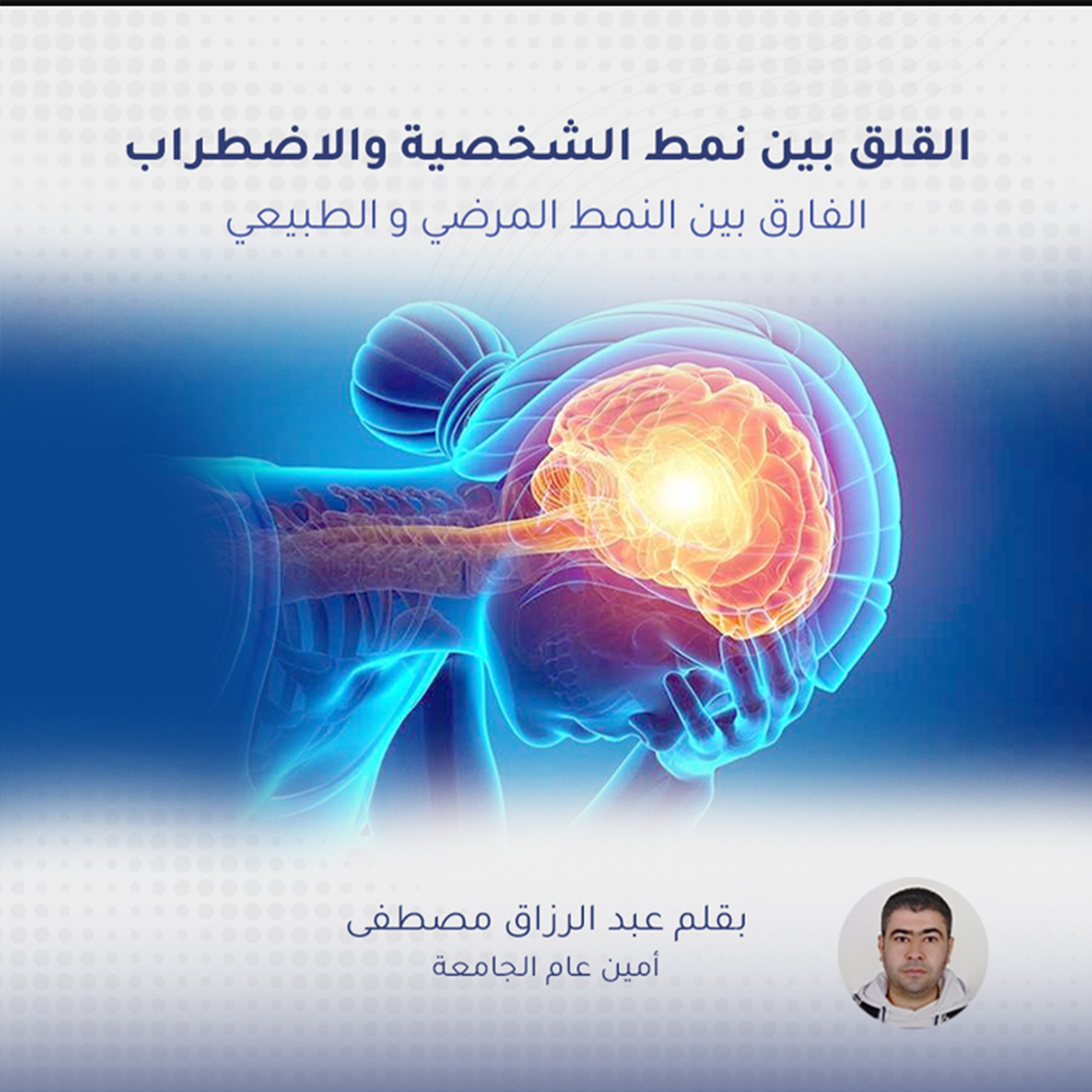
Anxiety Between Personality Trait and Disorder: The Difference Between Pathological and Normal Patterns
Anxiety is a natural response to everyday challenges and difficult situations, and it is an essential part of the human experience. Under normal circumstances, anxiety helps enhance focus and attention and motivates an appropriate response to deal with challenging or risky situations. However, anxiety becomes a psychological problem when it is excessive and unjustified, significantly affecting a person’s daily functioning and leading to negative consequences for both mental and physical health.
This article aims to shed light on the difference between an anxious personality and an anxiety disorder, explain the biological, cognitive, and behavioral changes that occur when anxiety develops into a psychological disorder, and discuss the importance of early intervention and psychotherapy.
Anxiety as a Personality Trait
It is normal for people to feel anxious in certain situations such as exams, interviews, or any events requiring preparation and focus. A person with an anxious personality tends to react more noticeably to stress, often overthinking or worrying about the future. However, they are generally able to adapt to and manage these feelings in ways that allow them to continue their daily lives normally. In this case, anxiety is considered a personality trait that sometimes acts as a motivating factor.
Anxiety Disorder: From Normal to Pathological
An anxiety disorder occurs when anxiety exceeds normal limits and begins to interfere with daily activities, negatively affecting a person’s life.
Anxiety disorders include a range of conditions such as generalized anxiety disorder, social anxiety, and panic attacks. At this stage, anxiety becomes more complex and harder to control. People suffering from anxiety disorders often struggle to manage their thoughts and feel anxious even when there is no real threat.
Biological Changes in Anxiety Disorder
Anxiety disorders are linked to fundamental changes in the brain and nervous system. One key brain region involved in fear response is the amygdala. In individuals with anxiety disorders, this area shows heightened activity, leading to exaggerated responses to situations that require little or no anxiety at all.
In addition, people with anxiety disorders often have imbalances in neurotransmitters such as serotonin and norepinephrine, which play key roles in regulating mood and emotional responses.
Moreover, the sympathetic nervous system shows excessive reactivity, leading to physical symptoms such as rapid heartbeat, excessive sweating, and shortness of breath.
These physical symptoms make the person feel as though there is a real threat, even when the fear is unfounded.
Cognitive Changes: From Normal Anxiety to Catastrophic Thinking
Cognitively, individuals with normal anxiety may sometimes have trouble concentrating or tend to overthink negative scenarios, but they can usually evaluate their thoughts realistically.
In contrast, individuals with anxiety disorders experience persistent and uncontrollable negative thoughts, which turn into a pattern of catastrophic thinking. This way of thinking reinforces constant fear and complicates anxiety, as the person consistently expects the worst possible outcome—even when it is unrealistic.
Psychological and Behavioral Changes: The Impact of Anxiety on Daily Life
Behaviorally, anxiety disorders often lead to increased avoidance of stressful or anxiety-inducing situations, whether social, professional, or even ordinary daily events.
For example, a person with social anxiety may avoid interactions with others out of fear of criticism or embarrassment.
Such avoidance behavior can result in social isolation and a decline in quality of life.
In more severe cases, panic attacks may occur—sudden physical and emotional reactions of intense fear characterized by rapid heartbeat, shortness of breath, and a sense of losing control.
Panic attacks often become a turning point that drives individuals to seek treatment, as the fear of another attack dominates their thoughts and increases their overall anxiety.
The Role of Psychotherapy in Managing Anxiety Disorders
Early medical intervention or psychotherapy, particularly Cognitive Behavioral Therapy (CBT), plays an effective role in managing anxiety disorders.
This form of therapy helps individuals modify negative thought patterns and replace them with more realistic and positive ones. Through CBT sessions, individuals learn effective strategies to manage their thoughts and behaviors, enabling them to regain control over their lives.
Research indicates that early intervention increases the chances of faster recovery and reduces the likelihood of anxiety becoming a persistent behavioral pattern.
Conclusion
Anxiety is a natural and beneficial part of human life, serving as a motivational mechanism that helps improve performance in challenging situations. However, when anxiety becomes excessive, unjustified, and interferes with daily life, it turns into a psychological disorder that requires professional intervention and treatment.
Early intervention plays a crucial role in preventing the escalation of anxiety disorders and helps individuals regain control before anxiety becomes a chronic, life-limiting pattern.
Psychotherapy, especially CBT, is among the most effective approaches for treating anxiety disorders, as it helps individuals change negative thinking patterns and develop sustainable strategies for managing anxiety in healthy and constructive ways.
In the end, anxiety is a natural part of the human experience, but it can become a disorder when it hinders daily functioning. Early intervention and psychotherapy provide the opportunity to restore psychological balance and manage anxiety before it becomes a destructive force in life.
Abdulrazzaq Mustafa
Secretary-General, UHA University